Sunday, May 3, 2015

Uniform of a Lieut-Colonel of the Parachute Regiment - Falklands circa 1982

The following series of photographs are of the No. 2 Dress (Service Dress) uniform of a Lieutenant-Colonel of the Parachute Regiment circa 1982 (Falklands War). Although comprised of all authentic elements, the uniform has been “re-constructed” to represent that of the commanding officer of the 3rd Battalion (Green lanyard) of the regiment, who was present for the total action.

Not as well known as Lieut-Colonel Herbert “H” Jones VC MBE (2 Para), his name is Lieut-Colonel Hew William Royston Pike, and he planned and executed the highly successful frontal assault by 3 Para on the Argentinian forces in the critical Battle of Mount Longdon. He was awarded the Distinguished Service Order (DSO) for this action. He had been previously appointed a Member of the Military Order of the British Empire (MBE). Subsequently he was promoted to the rank of Lieut-General, and appointed Knight Commander of the Bath (KCB), before retirement in 2001.

Here is a photograph of Lieut-Colonels Pike (left) and Jones (right) standing on the flight deck of HMS Hermes during the voyage south to the Falklands in late April 1982. A second later photograph shows Lieut-General Sir Hew W.R. Pike MBE DSO KCB, prior to his retirement in 2001.


Essentially the complete uniform was acquired in 1987, not that many years after the conflict with Argentina. As I can best recall the uniform had belonged to a Captain or Lieutenant of 3 Para (by number of pips), but there was no name anywhere on the uniform. There was a label inside the coat labeled "Burton Tailored"(still a major high street clothier in the UK). It is fabricated out of fine khaki barathea wool. The original owner may well have served in the Falklands Conflict. The ribband bar represents Lieut-Colonel's Pike's awards subsequent to the issue of the South Atlantic Medal, including his DSO.


Monday, April 6, 2015

An Exercise in Photo-Reconnaissance Interpretation - Arnhem 1944


One of the more contentious issues which was, and has remained, from the planning for Operation Market-Garden are the results of a photo-reconnaissance flight flown over the Arnhem/Oosterbeek area just days prior to the start of the operation. The photography was taken by a specifically modified Supermarine Spitfire PR Mk XI, believed to be from one of the five RAF (No. 540-544 Sqn) Spitfire photo-reconnaissance squadrons based at RAF Benson. Probably No. 541 or 542 Sqn.

Restored Supermarine Spitfire PR Mk XI
 with invasion stripes

Restored Supermarine Spitfire PR Mk XI
 in normal operational camouflage color scheme

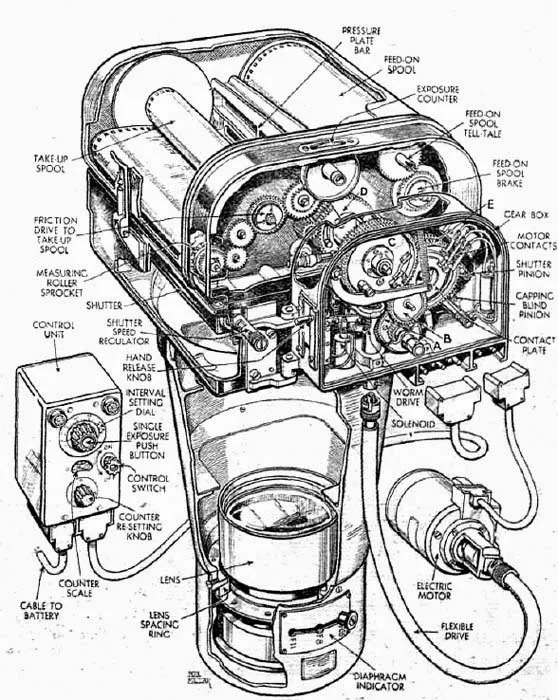
Detailed cut-away of a Supermarine Spitfire PR Mk XI

The Supermarine Spitfire PR Mk XI was produced in greater numbers than any other PR variant, with over 470 produced in total. It was based on the Mk IX fuselage, but with the extra fuel tanks of the standard PR variants as well as wing mounted tanks. It entered service in the summer of 1943. The PR Mk XI used a universal camera installation, which allowed the cameras to be easily changed. This allowed a much wider variety of cameras to be used, and as such it could undertake a great range of missions. Suffices that the aircraft would normally not have invasion stripes, providing at least a limited reduced level of visibility on the extremely dangerous missions. Being totally unarmed, speed was the aircraft's sole defense. Its top speed was 422 mph. Only the latest models of the Luftwaffe's best fighters had comparable performance. This included by the slightest differential the Messerschmitt BF 109G-10 (426 mph), Focke-Wulf FW 190D-9 (426 mph), and the Messerschmitt 262A (540 mph), which was available only in extremely limited numbers in September 1944.

Viewers familiar with the principles of photography will know that the longer the focal length of the camera lens, the larger the scale of the image; the larger the scale of the image, more detail and information for the photo-interpreter (PI) to extract. An example would be, a scale of 1:10000 would enable the PIs to see a man on a bicycle if the image was taken at 30,000 feet.

Another element that would also effect the information on the image would be the size of the film negative, the bigger the better, however, this had its drawbacks. The larger the negative, the larger the camera and the fewer image exposures in the camera magazine. Physical size of the film negatives were predominately three sizes. Initially 5”x 4” (127mm x 101.4mm) or 9”x 9” (Image size 7”x 7”), with later size being larger at 8”x 8” (215.9mm x 177.8mm).

Another factor was, the longer the focal-length of the lens the smaller area covered by the image negative and the last problem being, the lower that the reconnaissance aircraft flow to obtain the larger scaled imagery, the more dangerous it became for the pilot from enemy flak and fighter aircraft.

So to overcome these problems and obtain the best possible photograph of the target,  they used various types of cameras fitted with various lenses of different focal-lengths.

F.8 Camera
Lenses:
Mk I & II - 20" focal-length f/6.3
Mk IIA - 20" focal-length f/5.6
Mk III - 36" focal-length f/6.3
Mk IV - 40" focal-length f/88
Film magazine:
Mk I - 100 exposures - 65ft
Mk II to IV - 250 exposures - 155ft

F.52 Camera
Lenses: 5", 8", 14", 20",  36" & 40"

Magazine: 500 exposures.

The F.52 Photo-Reconnaissance Camera

Loading an F.8 photo-reconnaissance camera through the camera
access port of a Spitfire PR Mk IG

Details of a F.8 Photo-Reconnaissance Camera

The flight took place on 13 September 1944, three days prior to the commencement of the operation. The single logged Arnhem sortie occurring that day was 106G/2872, flown by FO L.S. Dearling of No.541 Sqn in a Spitfire PR Mk XI, PL856. Maj Brian Urquhart, the Staff Intelligence Officer for 1st Airborne Corps (subsequently to become Deputy Secretary-General of the United Nations in the post-WWII years) who had specifically requested the reconnaissance mission, immediately presented (on 15 September) these low-altitude oblique photos showing Kampfpanzer Mk III and Mk IV tanks, to LtGen Frederick A. M. ‘Boy’ Browning. These tanks were elements of the II SS Panzer Corps (9th and 10th Waffen-SS Panzer Divisions) refitting in the area north and east of Arnhem. Browning summarily dismissed the evidence, and had his staff medical officer place Urquhart on medical leave for 'nervous strain and physical exhaustion'.

Maj Brian Urquhart, Intelligence Officer
British1st Airborne Corps

What appears to be a Kampfpanzer Mk IV under camouflage for rest/refitting in the French Villiers-Bocage area, sometime after D-Day (6 June 1944). Crew are from a Waffen-SS Panzer Division.

Kampfpanzer Mk IV; Note sleeve insignia of the tank
 crewmen. Tank's gun barrel stands out in sharp contrast if
caught by a camera from above.

Re-enactors in the uniforms of a Waffen-SS Panzer Division with a restored Kampfpanzer Mk IV in the tactical markings of the 1st Waffen-SS Panzer Division.

Kampfpanzer Mk IV; note tactical marking on front left of hull

Another photograph of a restored Kampfpanzer Mk IV (probably the same tank) undergoing refitting.

Kampfpanzer Mk IV; note camouflage pattern on man
in foreground and license plate on motorcycle fender

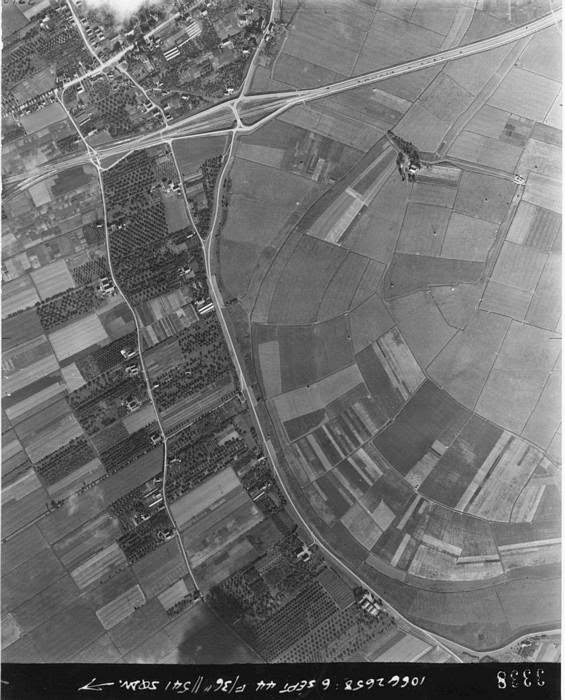
Although not having those very same photographs in hand, I do have copies of others taken by a Spitfire PR Mk XI of RAF No. 541 Squadron on prior flights on 6 and 17 September 1944 over the Arnhem/Oosterbeek area. Specifically they include a sequence of the main road bridge, and some of the area north of Arnhem. First the area around the main road bridge, shot on 6 September 1944.


The following two photographs were taken on 18 September 1944 showing the complete destruction of  SS-Hauptstrumführer Viktor Graebner's reconnaissance battalion at the north side of the main road bridge. Both photographs are attributed to Wg Cdr G.F.H. "Sandy" Webb (attached to RAF HQ 34 Wing) however flying Spitfire PR XI (PL834) attached to RAF No. 16 Sqn. There remains some confusion as to whether the aircraft/squadron was stationed at RAF Hartford Bridge or RAF Northolt. The same aircraft subsequently crashed and was destroyed on 20 September 1944, attesting to the extreme danger of the missions.


Compare these photographs with two pre-war high resolution photographs of the Arnhem road bridge.


Next are a series showing an east to west road under construction located north of Arnhem. Based on the annotations this series was shot on 17 September 1944, the commencement date of Operation Market-Garden.


 I thought it might prove interesting enough to present some of those photos to readers in order that they could personally see the resolution available at the time to photo-interpreters analyzing the footage. For those so inclined, the photos can be copied off the blog page as jpgs, enlarged (limited), rotated (not required), and overlaid in mosaics. Taken as individual high-speed sequential shots, the reader will notice in aligning them at least a two-thirds overlap is present.

Real enthusiasts may even want to take on the challenging task of matching the location of road depicted in the second set of photographs with the map shown below (Hint: It is a road under construction which passes through Schaarsbergen).


Finally is a brief video of a totally restored fully operational Supermarine Spitfire PR Mk XI.


Sunday, March 1, 2015

"Curiouser and Curiouser", An intriguing set of vintage W. Britains Ltd. toy soldiers


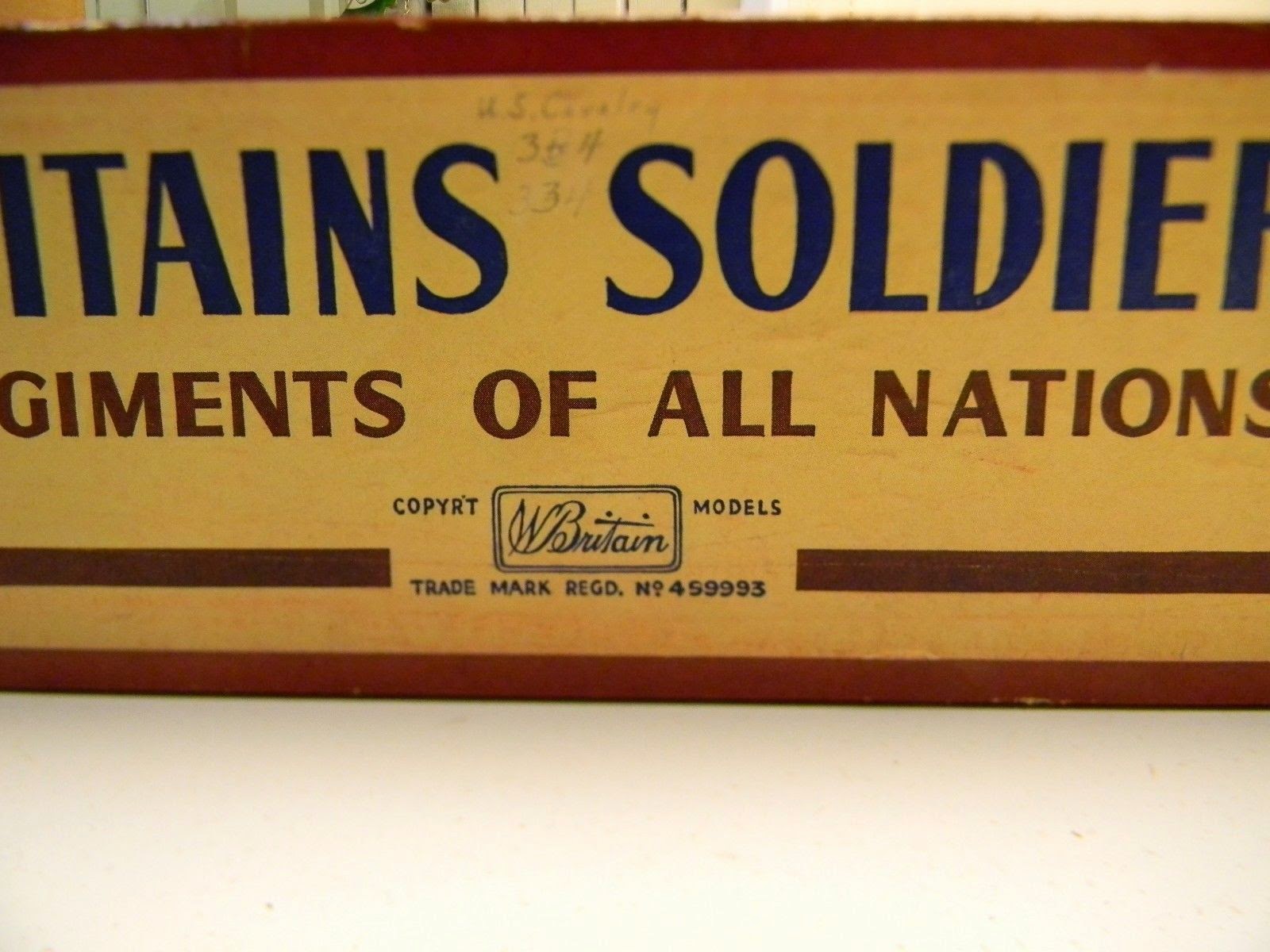
Am borrowing a quote from Lewis Carroll's classic, "Alice in Wonderland". Recently listed on e-Bay was a set of vintage W. Britains Ltd. toy soldiers titled; "Britains Regiments of All Nations 334 U.S. Cavalry 54mm. Metal” Included with the listing was a set of 9 photographs showing the figures. To anyone knowledgeable in old Britains, the set of 5 (4 troopers and officer) were immediately recognizable as Set No.170, Greek Cavalry, a very rare and highly collectible set. The known original sets consist of two troopers on black horses and two troopers on brown horses, with the officer mounted on a dapple grey (essentially white) horse.

In the set being offered all the trooper’s horses were black (an early clue, as the original brown color used is difficult to replicate), but this in and of itself, is never absolutely conclusive with Britains. All the horses were in the correct configuration (aid-de-camp for troopers, cantering for the officer). The set was originally issued in its first version in 1913 to 1925, when it was revised in a second version which was available until 1941. The set being offered was in a Regiment of All Nations cavalry sized box (introduced in 1946 after World War II), without the insert tie card. Obviously for purposes of valuation the set is considered unboxed. Even unboxed the figures are considered both rare and valuable. Near the zenith of Britains prices (1994) James Opie rated the rarity of a second version unboxed set at 75 (first version boxed at 90) on a logarithmic scale of 100, with a value of £700.00 ($1,038.03 USD) for the unboxed set.While in recent years the prices realized at auction for vintage Britains has significantly decreased, the prices on rarer sets have been for the most part at least stable, with increases occurring in some cases. The hammer price on Greek Cavalry sets has fluctuated depending on the condition, and presence of an original box and tie card (See discussion below). 

The auction was listed for a 7 day duration and initiated at $30.00. There was very little activity (2 bidders), until the closing day/hour of the auction. There were a total of nine bidders, of which I’m not certain how many of those realized what they were looking at. Perhaps they were smarter than I think, but don’t believe that to be the case as the price did jump significantly in the closing hours. What I believe to be the case are the efforts of a master counterfeiter, who was able to restore the set to virtually an undetectable "factory new" condition. In any event, and this may be a rationalization, I was able with the aid of sniper bidding, to win the auction at a relatively bargain price, even as a restoration. Other than the color of the horses, the only other thing I’ve been able to spot is an extremely small residual of brown paint near the hoof of one of trooper’s black horses, the positioning of the white cap-bands (more accurate in this set than Britains, see prints below), and the color of the metallic brown in the carbines. In any event finding another comparable set in this condition for the price is extremely remote, at least in my lifetime.

In the span of years from 2001 to 2013 there have only been 10 sets of Greek Cavalry come up for auction at Vectis Auctions Ltd. Six sets have been boxed. That’s less than one set per year (a significant indicator of rarity). The additional sets which were auctioned at Bonhams (James Opie), Bosley's, Wallis &Wallis, Phillip's, Christie's, Old Toy Soldier Auctions, U.S.A., and other auction houses in the same period, and are known to the author at this time, total an additional five. For the boxed sets at Vectis, the prices realized have ranged from £540.00 (in 2011) to £1800.00 (in 2006) for an average of £1170.00 ($1759.50 USD). The remaining 4 unboxed sets have ranged from £110.00 (in 2004) to £900.00 (in 2004) for an average of £497.50 ($748.07 USD).  This set on e-Bay sold for $261.00, even if totally restored that’s only 35% of the average value of an unboxed set. In the author's opinion this hardly seems worth the effort, if the objective was to deceive and profit.

In all fairness to the seller, he advised that someone during the course of the auction had discussed with him that the set was Set No.105, and Greek Officers. He questioned whether that made a difference to me, offering to cancel the sale. This information being only partially correct. At the price paid I choose to keep the set as a curiosity, as well as being an excellent restoration. As can be observed in the following photographs, in my personal opinion the set is truly a masterful piece of restoration art, and certainly unique. Upon close examination I believe that the majority of vintage Britains collectors will concur. Am including a couple of photographs from Vectis Auctions Ltd. of examples of the same set they have had up for recent past auctions for direct comparison. Counterfeiting of old toy soldier sets is to my knowledge not frequently even mentioned, if at all, in any of the standard reference books. The single exception known to the author being James Opie's recent excellent book, "Collecting Toy Soldiers in the 21st Century" (pp. 80-82), which is highly instructive. The author would welcome any comments by vintage Britains collectors on this, or any other set they may have come across of dubious origin/physical characteristics.


The following photographs are examples of the same set which have been auctioned by Vectis Auctions Ltd. in recent years. Note difference in the positions of horse's legs between sets. The one configuration of horse is referred to as an Aide-de-Camp (troopers), the other as Cantering (officer).


W. Britains Ltd. always prided itself on the accuracy portrayed in its sets, and frequently would correct errors, as well as revise a set of toy soldiers in the event that the uniform was changed in the actual unit they portrayed. In the case of the Greek Cavalry they were "spot on" as can be seen in the following contemporary prints. The only difference being the white plumes added in parade dress. Also note the white frogging on parade versus the black frogging in the field. In 1908 the Greek Army introduced a new khaki field uniform. In this case however, Britains chose to retain the older, more colorful, green uniform when its set was first introduced in 1913.

Greek Cavalry on parade, circa 1880-1910

Greek Cavalry patrol on reconnaissance, circa 1910
The officer wears the old field uniform, while the
 troopers wear the new khaki field uniform introduced
 in 1908 

A few years ago a similar case of complete misidentification occurred on e-Bay where some W. Britains Ltd. British Lancers, recall either 12th or 9th, were incorrectly listed as Britains Set No. 220 Uruguayan Cavalry, trotting with Officer (Ejercito del Uruguay: Blandengues de Artigas). In this case it was understandable, as the seller had a very limited knowledge of Britains, and the end label on the box indeed said Set No.220 Uruguayan Cavalry, etc. The following photographs are first what was being offered, then two photographs of the correct set.


For those individuals who may be interested in additional information, based upon the author's limited knowledge, you may want to scan the following article within this blog; http://arnhemjim.blogspot.com/p/britains-minatures.html.